Forced displacement of Chernobyl residents
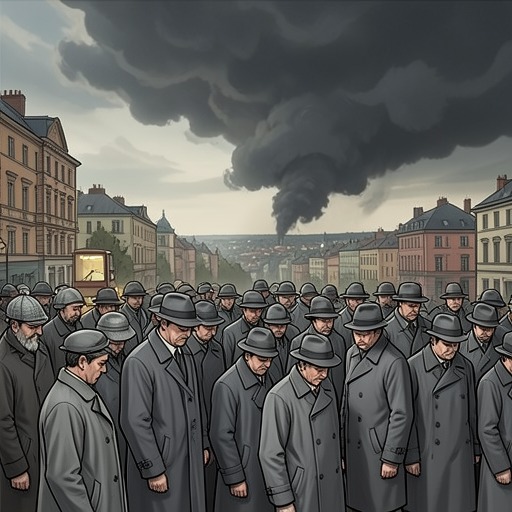
Voices from ChernobylForced displacement of Chernobyl residents is presented as a prolonged rupture rather than a single evacuation: people were taken from their homes, prevented from returning, and made strangers in places where they sought shelter. Across the testimonies, removal reshapes ordinary life as thoroughly as geography. Homes remain visible but inaccessible; relatives disappear into unknown institutions; and survivors carry a public identity that can close off friendship, marriage, and a sense of belonging.
Removal and the first rupture
In Pripyat, the evacuation was announced as temporary: residents were told they would be taken away for three days while their homes were cleaned and checked. People packed according to the small practical assumptions of an ordinary trip. One woman took only a gauze kerchief, while her husband put documents and wedding photographs into a briefcase. The expectation of return made the eventual loss harder to comprehend: belongings and domestic routines were left behind, but so was the possibility of treating the departure as a short interruption.
For another family, flight began when a friend and her husband reached their home in a Zhiguli after making their way from Pripyat through forests and small village roads. Police patrols and military block-posts were preventing people from leaving by the usual routes. The couple arrived in a bathrobe and athletic clothes, distressed about the new furniture and refrigerator they had abandoned, and preoccupied with finding milk and vodka. Their hosts waited for an official statement; only after the holiday did Mikhail Gorbachev appear on television to assure the public that the situation was under control. The contrast between the household’s panic and the delayed reassurance captures how displacement proceeded amid uncertainty and official silence.
Children were moved first, carried away on large buses. In Khoyniki, the evacuation called up familiar images from war films: a child waving bravely to a mother, and adults trying to give a frightening departure a recognizable form. Yet the actual distribution of courage and responsibility did not follow the heroic images. An alcoholic taxi driver went into the radioactive zone to collect children from kindergarten, while people celebrated on a local plaque did not take his place. The remembered scenes make displacement both a practical operation and a crisis in how people understood themselves and their obligations.
Blockades, return, and the land left behind
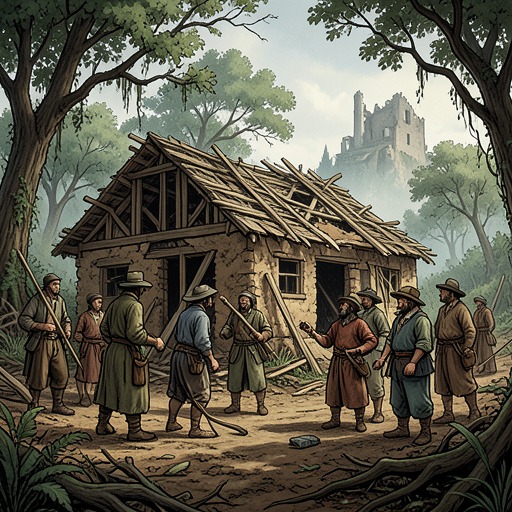
Evacuation did not end when residents reached another town. Soldiers guarded the evacuated villages, built observation posts, and were ordered to keep former inhabitants out. Farmers could not retrieve a bucket, saw, or axe, nor harvest crops from their own land. The restriction produced a stark division: soldiers stood on one side of the road to prevent residents from entering, while cows grazed, harvesters worked, and grain was shipped on the other. Some residents brought food and drink to the soldiers and pleaded to be allowed back to their houses. Their furniture, fields, and belongings remained part of their daily lives, even as access to them was denied.
The rules reached into the most ordinary acts of subsistence. A woman might milk a cow only to be watched by a soldier as she poured the milk onto the ground; another resident carrying eggs could be made to bury them. Potatoes were harvested even where they were supposed to be buried. The scene joins restriction to contradiction: people were barred from their homes and produce was treated as contaminated, yet agricultural work continued nearby. Displacement therefore did not simply separate residents from the land; it also made the meaning of work, ownership, and safety difficult to reconcile.
Some tried to cross the boundary anyway. An old woman asked a visitor near a police post to check her hut because it was time to dig up the potatoes and soldiers would not let her through. Others slipped into their villages at night through snowy forests and swamps, evading military patrols and the vehicles and helicopters sent to catch them. Their return was not a settled resumption of life but a clandestine passage through a controlled landscape. Even a memorial visit remained limited: on May 1, people were allowed to enter the cemetery and see their houses from afar, but police forbade them from going to their homes and gardens. They could bless the places they had lost from a distance, without crossing back into them.
Refuge, stigma, and broken ties
The displaced could encounter suspicion before they found shelter. On a journey to Minsk, evacuees had to pay three times the usual price for train seats. A conductor offered tea to other passengers but asked the newcomers to hand over their cups; only afterward did they understand that people were afraid of them because they came from Chernobyl. Objects brought from home could also become reminders of danger. A blanket carried back to an apartment had a stain that would not come out with washing or vacuuming; at the dry-cleaner, the spot was found to glow and was cut away. The same blanket and a familiar coat remained physically recognizable, but no longer felt safe to use.
A family that settled in Mogilev found that exclusion could follow a child into school. On his first day, a girl refused to sit beside their fourth-grade son because she believed he was radioactive. The only pupil from Chernobyl in the class, he was called Shiny, and his mother understood his childhood to have ended early. In a separate account, a girl at pioneer camp was treated as a test of whether a Chernobyl child would glow in the dark: other children sent her into the yard at night to see. Such incidents turn displacement into an imposed social identity. The family has left the contaminated place, but others continue to treat the person as if the danger were visible on the body.
That stigma could enter intimate relationships. A young woman whose family had been displaced described herself as afraid to love, even though she and her fiancé had registered their marriage. His mother, after learning that the bride-to-be came from a Chernobyl family, raised the question of whether she could have children. The fiancé offered to leave home and rent an apartment, but the doubt about whether it was right to give birth had already transformed the prospect of marriage. The displacement thus extended into imagined futures: not only where a family could live, but whether its members could marry and have children without being regarded as a risk to others.
Unequal losses and people left unaccounted for
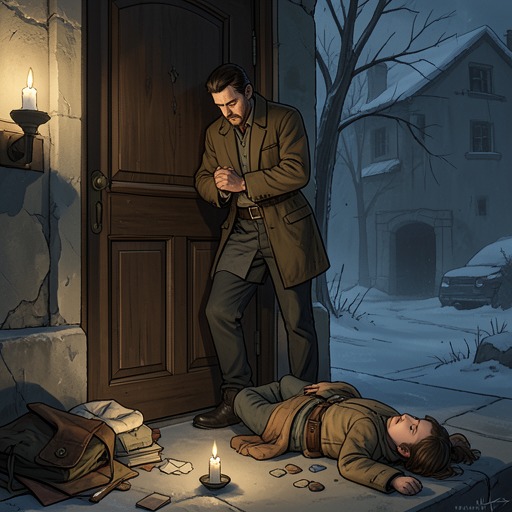
The accounts also show how displacement could separate people from caregivers and from one another in ways that were not repaired by later return. Anna Sushko, a sixty-year-old woman who had been mute from birth and lived alone in Kozhushki, was placed in an ambulance during the transfer and driven away to an unknown destination. She had never learned to read, so the people who had cared for her received no letters. Villagers had chopped her wood, brought her milk, and sat with her in the evenings to warm the stove. After two years living elsewhere, they returned to their homes and asked for her address, hoping to bring her back before she died of sorrow. Her house still stood, but the community could not find the person who had lived in it. Her story makes clear that removal did not affect everyone in the same way: someone dependent on neighbors for daily care could vanish into the displacement process without any reliable means of contact or return.
Other families experienced separation even when relatives survived and remained reachable. A woman who fled with her daughter to Minsk went to her own sister, only to be refused entry because the sister was nursing a baby. Mother and daughter slept at the train station. In another household, an older woman could not accept the new place and continued to long for the former home; shortly before she died, she asked for sorrel, a food the family had been forbidden to eat for years because it absorbed radiation. Her burial took place in her old village, inside the restricted area. Soldiers allowed the adults through but turned away a child, who understood that she would never be able to visit her grandmother there. The grave remained within reach of the family’s memory, but not of the child’s presence.
A continuing condition
Several testimonies describe the displaced as a people set apart. One resident recalled becoming a Chernobyl person: someone once ordinary, defined by work and routine, now watched and questioned as an object of curiosity. Another family concluded that it was easier to remain among people who shared the same memories and fate. In their view, elsewhere they would be treated as foreigners or lepers, while at home among other Chernobylites they could accept food from a neighbor without shame or suspicion. The choice to stay was therefore not simply a preference for a familiar landscape; it was also a way of avoiding the isolation attached to the displaced identity.
The accounts resist any simple ending in which relocation resolves the emergency. Former residents could see their houses but not enter them; they could return secretly but not reclaim an ordinary life; they could find shelter yet be shunned as contaminated. The children carried the rupture into school and into adulthood, while older and medically vulnerable people faced added dependence on systems and relationships that could fail to keep them connected. Forced displacement appears here as a continuing condition: a separation from home maintained by barriers, fear, and stigma, even after the first journey away was over.